 “Charles Dickens was born at midnight on February 7, 1812. . . . It was reported that the newborn baby began to cry as the clock struck 12, and many feel that his voice is as real today as it was 200 years ago.”
Raymond M. Lane
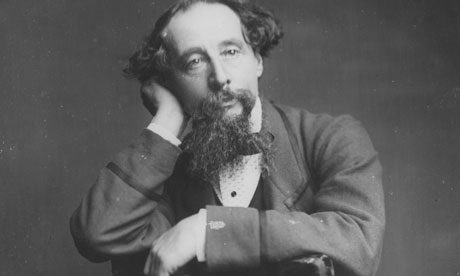
“The reason I love him so deeply is that, having experienced the lower depths, he never ceased, till the day he died, to commit himself, both in his work and in his life, to trying to right the wrongs inflicted by society, above all, perhaps by giving the dispossessed a voice. From the moment he started to write, he spoke for the people, and the people loved him for it, as do I.”
Simon Callow
“I hold him in my heart of hearts as a man apart from all other men, as one apart from all other beings.”
Mary “Mamie” Dickens
 “If it were possible I would like to devote the fifty minutes of every class meeting to mute meditation, concentration, and admiration of Dickens.”
Vladimir Nabokov
“Why read Dickens? Why read Dickens! Good reader, you might as well question why breathe, why eat, why live.”
Martin Cheek
“No one thinks first of Mr. Dickens as a writer. He is at once, through his books, a friend.”
Charles Eliot Norton
“Dickens was a mythologist rather than a novelist; he was the last of the mythologists, and perhaps the greatest. He did not always manage to make his characters men, but he always managed, at the least, to make them gods.”
G. K. Chesterton
“He wasn’t a pompous person, he was a very self-effacing, an unassuming person and cared passionately for his fellow man.”
Ian Dickens
 “. . . No other author that I have read gives off from his pages the same sense of ebullient, irrepressible joy in language. Dickens goes on and on, even when there’s no formal or thematic necessity to his elaborations, not because he is ‘paid by the word’ or doesn’t understand novelistic form, but because he is loving it — how can we resist? Why would we want to?”
Rohan Maitzen
“The most Dickensian moment early in ‘A Christmas Carol’ comes when Scrooge arrives home in the evening to see Marley’s face in his door-knocker: ‘He did pause, with a moment’s irresolution, before he shut the door; and he did look cautiously behind it first, as if he half expected to be terrified with the sight of Marley’s pigtail sticking out into the hall.’ English literature has had perhaps a dozen authors who could or would have done the door-knocker. Only Dickens is capable of the pigtail.”
J. Bottum
“I became a writer because I read Charles Dickens. . . .”
John Irving
 “How often one really thinks about any writer, even a writer one cares for, is a difficult thing to decide; but I should doubt whether anyone who has actually read Dickens can go a week without remembering him in one context or another. Whether you approve of him or not, he is there, like the Nelson Column. At any moment some scene or character, which may come from some book you cannot even remember the name of, is liable to drop into your mind. Micawber’s letters! Winkle in the witness-box! Mrs. Gamp! Mrs. Wititterly and Sir Tumley Snuffim! Todgers’s! (George Gissing said that when he passed the Monument it was never of the Fire of London that he thought, always of Todgers’s.) Mrs. Leo Hunter! Squeers! Silas Wegg and the Decline and Fall-off of the Russian Empire! Miss Mills and the Desert of Sahara! Wopsle acting Hamlet! Mrs. Jellyby! Mantalini, Jerry Cruncher, Barkis, Pumblechook, Tracy Tupman, Skimpole, Joe Gargery, Pecksniff — and so it goes on and on. It is not so much a series of books, it is more like a world.”
George Orwell

“He is the novelist who comes closest of all novelists to delivering on that illusory promise of the novel — to tell everything there is to know about everyone, and to tell it in an incomparably fresh and delightful way.”
Jane Smiley
“. . . I cannot lose the opportunity of saying how much I love and esteem him for what he has taught me through his writings — and for the genial influence that these writings spread around them wherever they go. Never having seen Boz in the body, we have yet had many a tête-à-tête.“
Walt Whitman
“Certainly, on the whole, one of the greatest geniuses in fiction the world has produced.”
Edward Bulwer-Lytton
 “Probably the immense vitality of Dickens causes his characters to vibrate a little, so that they borrow his life and appear to lead one of their own. It is a conjuring trick. Part of the genius of Dickens is that he does use types and caricatures, people whom we recognize the instant they re-enter, and yet achieves effects that are not mechanical and a vision of humanity that is not shallow.”
E. M. Forster

“Dickens tells how once, in York, a lady stopped him in the street and said, ‘Mr. Dickens, will you let me touch the hand that has filled my house with many friends,’ and there were readers all over the country ready to offer a similar tribute.”
Amy Cruse
“Dickens is huge — like the sky.”
Susanna Clarke
“When Dickens called himself ‘the Inimitable,’ he was speaking no more than the truth; he was the greatest comic writer in his, or perhaps in any other, language. And the comedy runs deep: it is not trivial, for while it depicts absurdity, pomposity, and even cruelty, it has the curious effect of reconciling us to life even as it lays human weaknesses out for our inspection.”
Theodore Dalrymple
“. . . He is, by pure force of genius, one of the great writers of the world.”
George Bernard Shaw
“The story of his childish misery has itself sufficiently shown that he never throughout it lost his precious gift of animal spirits, or his native capacity for humorous enjoyment; and there were positive gains to him from what he underwent, which were also rich and lasting. To what in the outset of his difficulties and trials gave the decisive bent to his genius, I have already made special reference; and we are to observe, of what followed, that with the very poor and unprosperous, out of whose sufferings and strugglings, and the virtues as well as vices born of them, his not least splendid successes were wrought, his childish experiences had made him actually one. They were not his clients whose cause he pleaded with such pathos and humour, and on whose side he got the laughter and tears of all the world, but in some sort his very self. “
John Forster
“Now that spring examinations were over she was treating herself to Dickens.”
L. M. Montgomery
 “Dickens was so full of life that it did not seem possible he could die. . . .”
Henry Wadsworth Longfellow
“. . . The world he created shines with undying life, and the hearts of men still vibrate to his indignant anger, his love, his tears, his glorious laughter, and his triumphant faith in the dignity of man.”
Edgar Johnson

“For the first time, the downtrodden English people were able to see a celebrity, a man of wealth and fame, who was on their side.”
Christopher Hitchens
“Who call him spurious and shoddy
Shall do it o’er my lifeless body.
I heartily invite such birds
To come outside and say those words!”
Dorothy Parker
“Charles Dickens was a truly self-made man — but he never forgot the lessons his childhood had taught him and he strove to bring about change.”
Lucinda Dickens Hawksley
 “Books such as ‘Great Expectations’ were part of the great moral revolution which made this country prosperous, ordered and civilised. They are crucial to our civilisation. Like all great moral books, it makes the reader envy the good characters their goodness, and want to emulate them. It made us recognise the good and the bad in ourselves — in fact Dickens ceaselessly did this, probably because he was himself struggling all the time against his own cruelty and selfishness, and loathed these things in others.”
Peter Hitchens

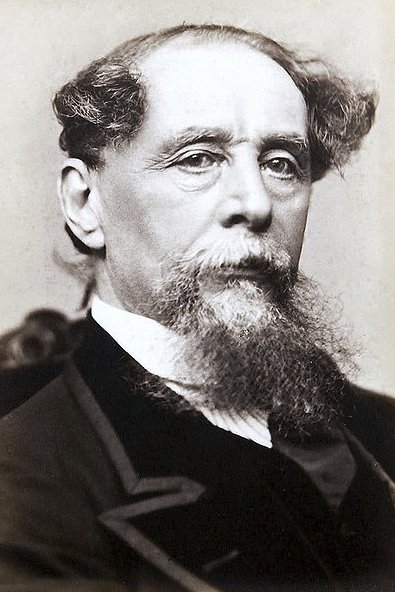
“. . . For all his faults, there is still no one to touch him — for breadth, for depth (especially in the later novels), for moral seriousness, hilarious comedy, social criticism and for filling a room with characters you suddenly know better than some of your closest friends.”
Katherine Ashenburg
“Who can listen to objections regarding such a book as [‘A Christmas Carol’]? It seems to me a national benefit, and to every man or woman who reads it a personal kindness. The last two people I heard speak of it were women; neither knows the other or the author, and both of them said, by way of criticism, ‘God bless him!’ . . . What a feeling is this for a writer to be able to inspire, and what a reward to reap!”
William Makepeace Thackeray
“Like a lamp, Dickens’ words shine on the dark places that the blinders of familiarity shield from sight. Like a prophet, Dickens proclaims the truths his contemporaries couldn’t, or wouldn’t, see. In expressing the particularities of his own time and place, his stories continue today to illuminate universal truths of the human condition.”
Karen Swallow Prior
“It is the privilege of a great writer to put into his work the finest qualities of his heart and brain, to make permanent the best part of himself, and through that to influence the world. In speaking of Dickens’s triumphs as an author, I have felt that the most fervent praise could not err by excess; every time I open his books, as the years go on, it is with ever more of wonder, delight, admiration, and love.”
George Gissing
“This much is clear: on Feb. 7, 2112, they’ll be wishing the original Inimitable a very happy 300th birthday.”
Radhika Jones

(Thanks to Dickensblog reader Nina for this beautiful piece of original artwork!)
I hardly feel fit to add anything after the august group above have all had their say. I will say only this: that ever since I first met him in the pages of my high school literature book, Charles Dickens has brought me great joy; that my life would have been poorer without that meeting; and that I look forward to many, many more years of his wise and cheerful companionship.
If you have a toast or a tribute for our guest of honor, please post it below!